Labour Department - Chapter 3 – Labour Relations
The Programme of Labour Relations
www.labour.gov.hk/eng/labour/content.htm
In Hong Kong, employer and employee relations are largely premised on the stipulations of labour laws, and the terms and conditions of employment agreed and entered into between the two parties. Employers and employees are free to form trade unions and participate in union activities. The objective of the Labour Relations Programme is to maintain and promote harmonious labour relations in establishments outside the government sector. We achieve this by:
- giving advice on matters relating to conditions of employment, requirements of relevant labour legislation, and good human resource management practices;
- providing voluntary conciliation service to help employers and employees resolve their employment claims and labour disputes;
- promoting understanding of labour laws and encouraging good human resource management practices;
- adjudicating minor employment claims speedily through the Minor Employment Claims Adjudication Board (MECAB); and
- registering trade unions and their rules, organising courses and conducting visits to trade unions to bring about sound and responsible trade union administration.
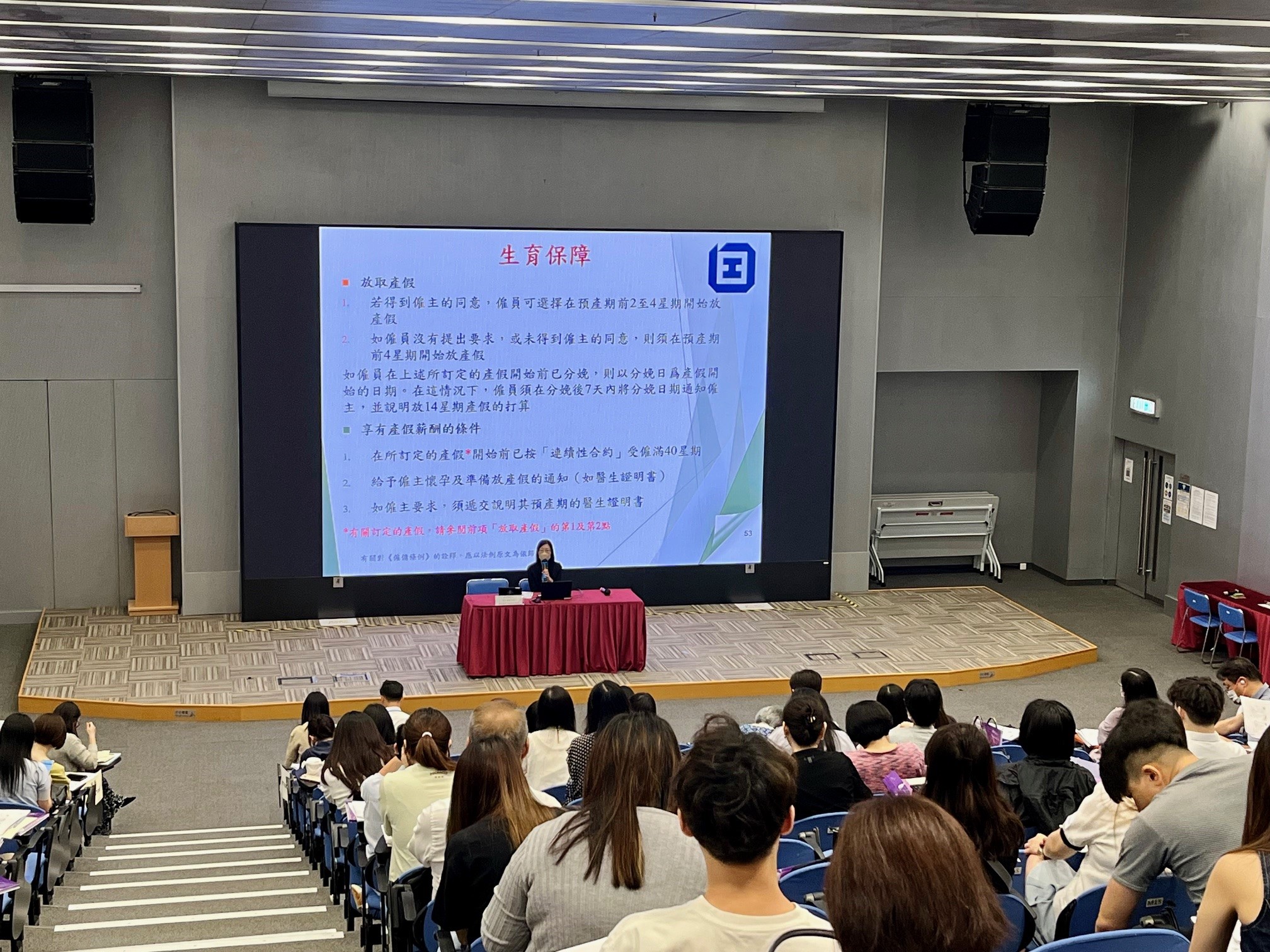
The Labour Department organised seminars on the Employment Ordinance to enhance public understanding of labour laws and encourage good human resource management practices
3.2 The principal legislation administered by this programme area includes the Employment Ordinance (EO), the Minimum Wage Ordinance (MWO), the Labour Relations Ordinance (LRO), the Minor Employment Claims Adjudication Board Ordinance (MECABO) and the Trade Unions Ordinance (TUO).
3.3 The EO sets the basic standard on the conditions of employment that establishments outside the government sector have to meet. The MWO establishes a Statutory Minimum Wage regime. A set of procedures for settling labour disputes in establishments outside the government sector are provided for in the LRO. The MECABO establishes the machinery known as the MECAB to adjudicate minor employment claims when settlement cannot be achieved by conciliation. For the regulation of trade unions, the TUO provides a statutory framework for trade union registration and administration.
Our Work and Achievements in 2025
Key Indicators of Work
3.4 Some key indicators of work of the Labour Relations Programme Area are contained in Appendix 3.1.
Improvement to Employees’ Benefits
3.5 The Legislative Council on 18 June 2025 passed the amendments to the working hours threshold of “continuous contract” requirement under the EO, which include lowering the weekly working hours threshold from 18 hours to 17 hours and providing an alternative counting unit of using the aggregate working hours of not less than 68 hours in a specified four-week period, making it easier for employees to enjoy comprehensive employment rights and benefits. The new requirement is applicable from 18 January 2026.
Consultation and Conciliation Services
3.6 Our consultation and conciliation services are conducive to maintaining harmonious labour relations in Hong Kong. In 2025, we held 59 188 consultation meetings, and handled 14 342 claims (each involving 20 or less employees) and 127 labour disputes (each involving more than 20 employees). Over 70% of cases with conciliation service rendered were settled in the year (Appendices 3.2, 3.3, 3.4, 3.5, 3.6 and 3.7).
Strengthening Tripartite Dialogue
3.7 The Labour Department (LD) runs ten industry-based tripartite committees, covering catering, cement and concrete, construction, hotel and tourism, logistics, printing, property management, retail, theatre and digital platform industries, to promote tripartite dialogue at the industry level. These tripartite committees provide effective forums for members to discuss issues of common concern to their industries.

Members of an industry-based tripartite committee discussed issues of common concern to their industry at a meeting
Promotion of Good Employer-Employee Relations
3.8 To enhance public understanding of the EO and to promote good human resource management culture, the LD organised various promotional activities and published free publications covering different themes for employers, employees, human resources professionals and the public. Relevant information was also disseminated through the LD’s homepage and the media. We also widely publicised messages about good human resource management as well as statutory employment rights and protection through the extensive network of employers’ associations and trade unions. Furthermore, we organised the Good Employer Charter and Good Employee Recognition Campaign to encourage employers’ adoption of “employee-oriented” good human resource management measures and implementation of family-friendly employment practices, while at the same time fostering harmonious labour relations.
 publications.jpg)
The Labour Department published free publications covering different themes to enhance public understanding of the Employment Ordinance and to promote good human resource management culture
 GERC.JPG)
The Labour Department held the Results Announcement Event of Good Employee Recognition Campaign to encourage more employers to adopt good human resource management measures and implement family-friendly employment practices
3.9 The LD organised experience-sharing sessions and briefings and published newsletters for members of 18 human resources managers’ clubs established in different trades. We also published newspaper articles and comic strips, and placed advertisements in periodic journals of major employers’ associations and labour organisations to promote good human resource management. Besides, to enhance the knowledge of ethnic minorities (EM) on the EO, we published and distributed the “Employment Ordinance at a Glance” and other relevant information in multiple EM languages through various channels, and publicised such messages through radio programmes in EM languages.
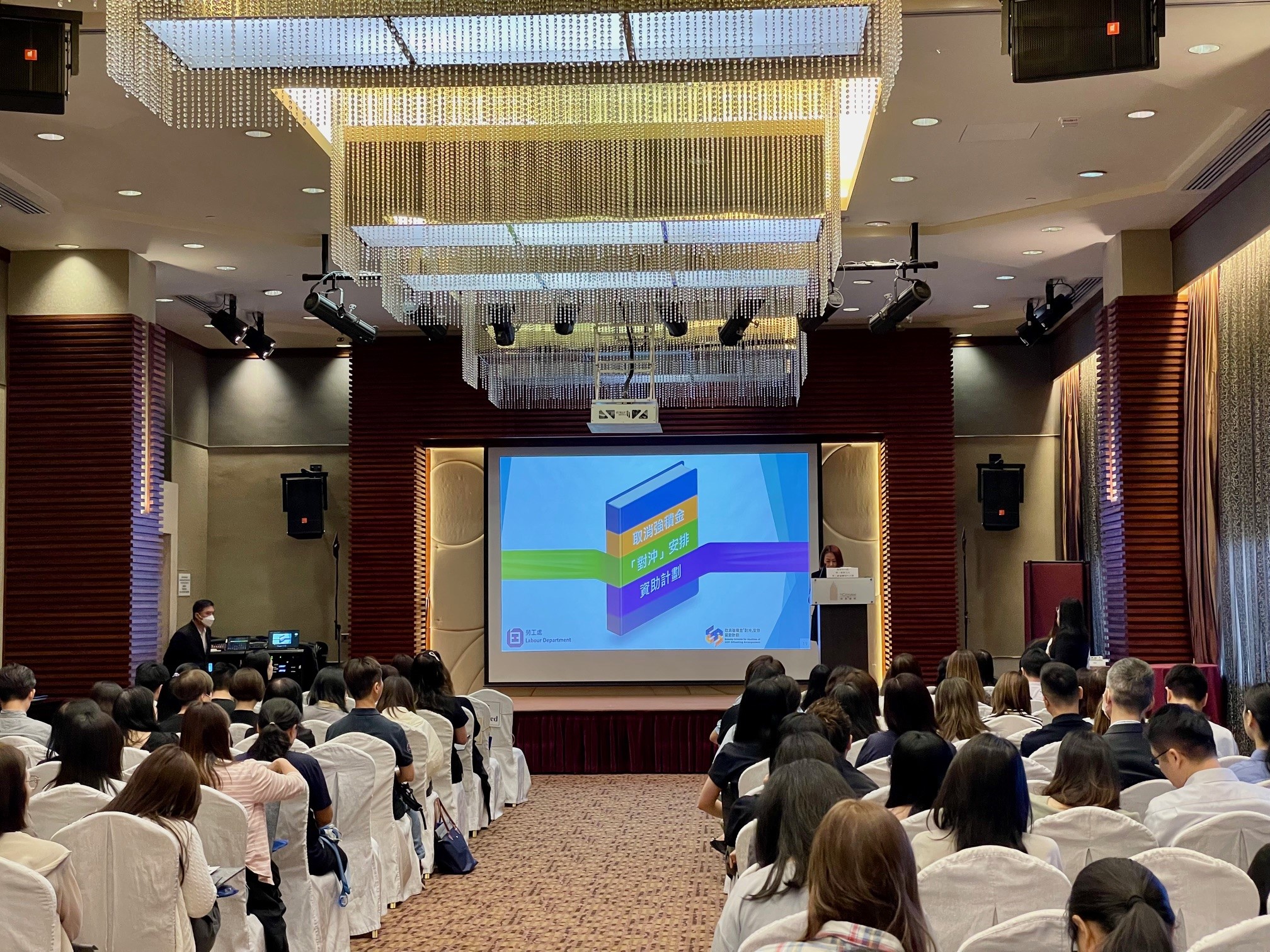
The Labour Department organised experience-sharing sessions and briefings for members of human resources managers’ clubs established in different trades
Adjudication of Minor Employment Claims
3.10 The MECAB provides a speedy, informal and less costly adjudication service for members of the public. The MECAB has jurisdiction to determine employment claims involving not more than 10 claimants for a sum not exceeding $15,000 per claimant.
3.11 In 2025, the MECAB recorded 1 063 claims amounting to $8,386,535 and concluded 1 068 claims with awarded sum totalling of $4,921,688.
Regulation of Trade Unions
3.12 The Registry of Trade Unions (RTU) is responsible for administering the TUO and the Trade Union Registration Regulations, with a view to fostering sound trade union management and responsible trade unionism, ensuring trade unions’ compliance with the law and their respective rules. Its major areas of work include registering trade unions and their rules, examining trade unions’ annual statements of account and any other returns required by the law to be furnished to the RTU, conducting visits to trade unions and organising educational and promotional activities to enhance the understanding of trade union officers and paid staff on national security and trade union administration.
3.13 In 2025, the RTU completed five registrations of new trade unions. As at end-2025, trade unions registered under the TUO totalled 1 408 (comprising 1 331 employee unions, 11 employer associations, 49 mixed organisations of employees and employers and 17 trade union federations). Please refer to the following webpage for the key trade union statistics: www.labour.gov.hk/eng/labour/content3.htm.
3.14 In the year, the RTU examined 1 174 annual statements of account and conducted 379 visits to trade unions. The RTU organised courses and seminars to enhance the understanding of trade union officers and paid staff on national security, union management and/or trade union bookkeeping.
3.15 In July 2025, the Government completed amendments to the Trade Unions Ordinance, with the new requirements coming into operation on 5 January 2026, to better safeguard national security and improve the trade union regulatory regime.