Annual Report 2002
Chapter 5
Employment Services
The Programme of Employment Services5.1 Unemployment remains
the foremost concern of the Labour Department in 2002.
To complement the job creation efforts of the Government,
we give every assistance to local job-seekers, particularly
the more vulnerable groups. The objective of the Employment
Services Programme is to provide a comprehensive range
of free and effective employment assistance and counselling
services to help job-seekers find suitable jobs and
employers fill their vacancies. We achieve this by:
5.2 The two principal legislation administered by this programme area are the Employment Agency Regulations made under the Employment Ordinance and the Contracts for Employment Outside Hong Kong Ordinance.
5.3 The Employment Agency
Regulations, together with the Part XII of the Employment
Ordinance, regulate the operation of employment agencies
in Hong Kong through licensing, inspection, investigation
and prosecution.
5.4 The Contracts for Employment Outside Hong Kong Ordinance safeguards the interests of local manual workers and those non-manual employees with monthly wages not exceeding $20,000 who are recruited by employers outside Hong Kong to work in other territories through the attestation of employment contracts for these jobs.
Our Work and Achievements in 2002Employment Situation in Hong Kong 5.5 The labour market remained generally slack in 2002. The restructuring of labour market continued with a further decline of employment in the manufacturing sector. The seasonally-adjusted unemployment rate rose to 7.2 per cent in the fourth quarter of 2002, and the overall unemployment rate increased from 5.1 per cent in 2001 to 7.3 per cent in 2002. On the other hand, the overall underemployment rate increased from 2.5 per cent in 2001 to 3.0 per cent in 2002. Figures 5.1~5.7
5.6 The median hours of work per week for all employed persons was 48 hours in the fourth quarter of 2002. The average wages and salaries received by employees showed an overall decline across various sectors in the year. Figures 5.8 and 5.9
Key Indicators of Work 5.7 In spite of the difficult
times, our untiring efforts and good performance have
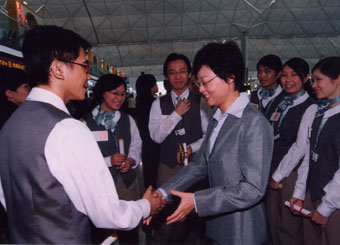
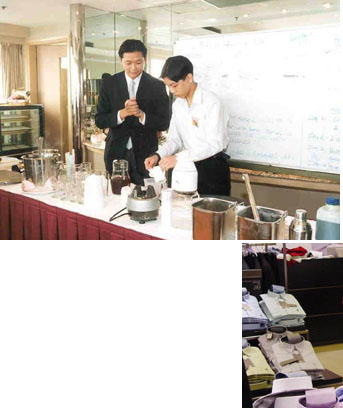
been widely recognised. Vacancies registered with the
Labour Department rose from 175 841 in 2001 to 209 570
in 2002. Although unemployment rate remained at a high
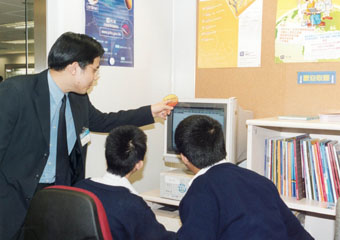
level, the department achieved 62 467 placements. Figures
5.10 and 5.11
A Wider Service Choice Services at Job Centres 5.8 Job-seekers can select
suitable vacancies and seek referral service at all
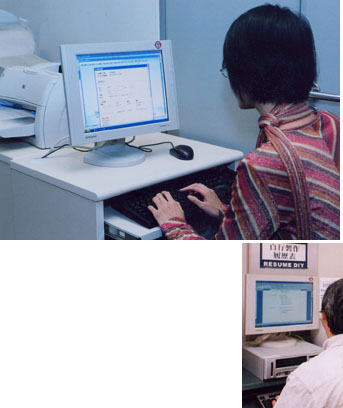
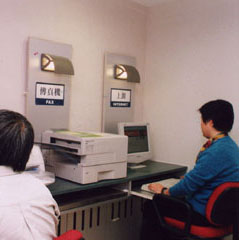
job centres. Modern facilities such as digital display
system, self-service touch-screen vacancy search terminals,
fax machines, toll-free phones, computers connected
to the Internet and a careers information corner are
available.
5.9 Through the Job Matching
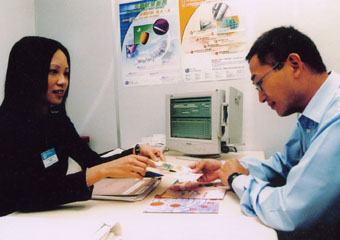
Programme, our staff conducts briefings and provides
intensive and personalised job-matching and counselling
service to unemployed job-seekers. Placement officers
will also refer job-seekers to suitable retraining courses
where appropriate.
Telephone Employment Service 5.10 Registered job-seekers
may call our Telephone Employment Service Centre for
job referral service. Through conference calls, staff
of the centre can arrange job-seekers to talk to employers
directly.
Interactive Employment Service (iES)Website 5.11 Our Interactive Employment
Service (iES) website (http://www.jobs.gov.hk)
provides round-the-clock internet employment service.
Hyperlinked with nine leading employment websites in
Hong Kong, the iES has been the most popular government
website in Hong Kong, accounting for more than one-third
of the page views for all government websites. In 2002,
the iES achieved a record number of 288 million page
views, a significant increase of 132 per cent when compared
to 2001. It is also the host of a number of dedicated
webpages for specific clientele groups.
Central Processing of Job Vacancies 5.12 Employers who need
to recruit staff can send their vacancy information
to our Job Vacancy Processing Centre through the internet
(http://www.jobs.gov.hk),
fax (number 2566 3331) or telephone (number
2503 3377). All vacancy information will
be uploaded onto the iES in one working day and disseminated
to all job centres through computer network.
Special Recruitment and Promotional Activities 5.13 We organise a variety
of activities to promote our employment services. Visits
and briefings are conducted to appeal for vacancies
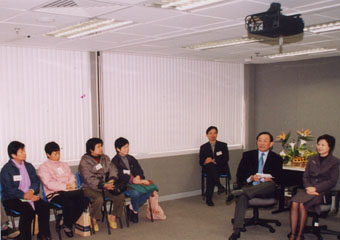
from employers. Recruitment seminars and job fairs are
held to facilitate job-seekers and employers to meet
and communicate directly. In 2002, these special recruitment
and promotional activities reached out to about 48 000
job-seekers and employers.
Intensive Services to the Most Needy Serving the Middle-Aged Job-seekers 5.14 The Re-employment
Pilot Programme for the Middle-Aged was to provide one-stop
employment service to job-seekers aged above 40 who
had been unemployed for more than three months. Since
its launching in 2001 to 2002, 4 869 job-seekers secured
employment through the Programme.
Service to Promote Local Domestic Helpers' Employment 5.15 In 2002, we continued
to publicise our dedicated employment services for promoting
local domestic helpers employment. Through the iES website,
roving exhibitions, job fairs and many other promotional
efforts, the service was widely introduced in different
parts of the territory.
Serving New Arrivals 5.16 The two employment and guidance centres in Shau Kei Wan and Mong Kok provide a comprehensive range of employment service tailor-made for the new arrivals.
Serving Workers affected by Large-scale Retrenchment 5.17 We assign special
counters at our job centres or render out-reach employment
services to workers affected by major retrenchments.
In 2002, the service reached out to 9 656 retrenched
workers of 50 companies.
Serving Job-seekers with a Disability 5.18 The Selective Placement Division provides personalised counselling, employment services and referral to tailor-made retraining programmes to job-seekers with a disability who seek open employment. In 2002, the division registered 4 225 disabled job-seekers. 2 572 of them were placed into employment, a record in the history of the division. The placement rate was 61 per cent. Figure 5.12
5.19 The Trial Placement cum Mentor Scheme for People with a Disability was launched in January 2002. It aims at motivating employers to recognise the working abilities of people with a disability through a 1-month trial placement, thereby enhancing the employment opportunities of people with a disability. Participating employers will receive a subsidy equal to half of the wages paid in the 1-month trial period, subject to a ceiling of $3,000. A mentorship element has been included in the scheme to help the disabled workers on trial to settle in the jobs more easily. The response from employers has been encouraging. By the end of 2002, there were 161 employers offering 253 job vacancies. About 78 per cent of the 237 disabled persons participating in the scheme were offered full employment by the employer after the trial period.
5.20 The Self Help Integrated Placement
Service (SHIPS) aims at improving the job-searching skills of disabled
job-seekers and encouraging them to be more proactive in the search
for jobs, thereby enhancing their employment opportunities. As at
the end of 2002, 1 743 disabled job-seekers had participated in
the programme. The overall placement rate of the SHIPS programme
was about 70 per cent, which compared favourably with the general
placement rate of the Selective Placement Division for 2002.
Services for Young People Youth Work Experience and Training Scheme (YWETS) 5.21 All trainees of the
YWETS are provided with career counselling and support
service through registered social workers in the capacity
of case managers. The trainees are required to attend
a 40-hour induction training course on job search, communication,
and workplace discipline, if they have not received
similar training before. In the first year of the YWETS,
about 5 000 trainees attended the induction training
courses.
5.22 The participating employers are paid a monthly training subsidy of $2,000 for each trainee engaged. They are also provided with a range of support services such as formulation of training plans and training of mentors. As at the end of December 2002, over 2 300 employers offered about 9 500 training vacancies under the YWETS, and over 6 000 trainees secured employment. To upgrade their vocational skills, the trainees are encouraged to enrol in relevant vocational training courses on an off-the-job basis. They are entitled to reimbursement of course and examination fees up to a maximum of $4,000 if they pass the vocational examination or achieve a 90 per cent course attendance rate.
5.23 Special projects tailor-made for individual industries have been organised under the YWETS so as to enhance the employment opportunities of trainees. They include the 'IT Seeds Project' to train IT assistants for schools, 'Travel Pioneers Project' to train customer representatives and ticketing staff for tour operators and travel agents, 'Airport Ambassadors Project' to train customer service officers for the international airport, and a special project organised in collaboration with the Arts Development Council to develop manpower for the artistic and creative industries. New projects in the pipeline include a 'Sports Instructor Trainees Scheme' jointly organised with the Leisure and Cultural Services Department, and a pilot project to place the more vulnerable trainees in non-government organisations for youth-related work.
5.24 We have appointed the Department of Applied Social Sciences of the Hong Kong Polytechnic University to develop performance indicators and evaluate the effectiveness of the YWETS. The work embraces mid-term and overall reviews, longitudinal surveys and a series of thematic studies. The study will be useful to the Government in the formulation and review on policies on youth training and employment.
Youth Pre-employment Training Programme (YPTP) 5.25 In 2002, we continued
with the YPTP with a wide range of employment-related
training and workplace attachment opportunities. Government
departments, training bodies and voluntary agencies
join hands to provide the following four modular training:
(a) leadership, self-discipline and team building; (b)
job-search and interpersonal skills; (c) elementary/
intermediate computer application; and (d) job-specific
skills training. Organisations from the private and
public sectors as well as social welfare agencies offer
workplace attachment training places for trainees to
obtain practical work experience and better understand
the world of work. Professional youth workers are available
to provide careers counselling and support services
throughout the programme. In the new phase of the programme,
a number of training courses geared to market needs
were added and careers counselling and support services
were also strengthened.
Careers Information and Guidance 5.26 We operate two careers information centres that function as information banks for young people and careers teachers. Each centre has a reference library with publications and audio-visual resources on employment and training opportunities. Careers videos and VCDs are available for free loan to secondary schools and youth organisations. Careers counselling and guidance service are also available to visitors of the centre. In 2002, we received 29 992 visitors and handled 41 288 consultations.
5.27 To provide young people with first-hand careers information, we organised a variety of careers activities in 2002, with a record number of 974 675 participants. Figure 5.13
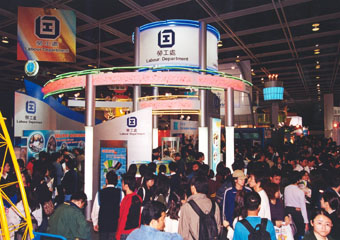
5.28 We jointly organised the Education and Careers Expo with the Hong Kong Trade Development Council for the 12th time in 2002 to provide the latest information on careers development and further education options. There were 343 participating exhibitors from a wide range of trades, government departments and professional bodies, as well as local and overseas educational and training institutes. The event attracted 194 189 visitors and proved to be the most popular careers information event in Hong Kong.
5.29 In collaboration with the Education
Department, we organised a comprehensive service package for Form
5 school leavers to provide them with a full range of counselling
and information on careers and further education opportunities.
A hotline, chat room service and a dedicated advisory centre were
set up and two talks were held around the announcement of the HKCEE
results. In addition, we staged seven roving exhibitions on education
and careers opportunities throughout the territory, attracting about
13 200 visitors. More than 100 000 copies of a tailor-made careers
handbook were distributed through various means.
5.30 We continued to conduct school-based careers activities and promote summer job-seekers' awareness of employment traps and work safety. Two part-time certificate courses were organised for in-service careers masters in the 2002/2003 school year in collaboration with the Education Department.
Regulating Local Employment Agencies and Employment Outside Hong Kong 5.31 We monitor the operation of employment agencies through licensing, inspection and investigation of complaints. In 2002, 1 489 employment agency licences were issued. Six licences were revoked, one application for renewal of licence and one application for issue of licence refused. A total of 1 308 enforcement inspections was made to employment agencies. At the end of 2002, there were 1 447 licensed employment agencies in Hong Kong.
5.32 We regulate employment outside
territory to safeguard the interests of local employees engaged
by enforcing the contracts for Employment Outside Hong Kong Ordinance.
Regulating Labour Importation 5.33 To cater for the genuine needs of employers, a Supplementary Labour Scheme that allows the entry of imported workers to take up jobs at the technician level or below and which cannot be filled locally, is administered by the Labour Department. It operates on the principles of ensuring the priority of local workers in employment while allowing employers with proven local recruitment difficulties to import labour to fill the necessary job vacancies. As at the end of 2002, there were 1 242 imported workers in Hong Kong.
5.34 We provide active job matching and referral services to local job-seekers to ensure their employment priority. Vacancies under the Scheme are widely publicised locally. To facilitate local workers in filling the vacancies, they could attend tailor-made retraining courses, if appropriate. Applications from employers who have set restrictive or unreasonable requirements in terms of age, education, sex, skill or experience for the vacancies or who have no genuine intention to employ local workers will be rejected.
|
||||||||||||||||||||||||||||||||||||||||||||||||||||||||||||||||||||||