Annual Report 2002
Chapter 1
Highlights of the Year 2002
|
1.1 2002 was an eventful
year for the Labour Department. The following is a glance
of some of our major activities and events.
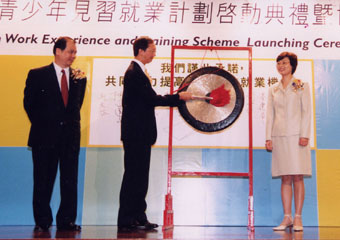
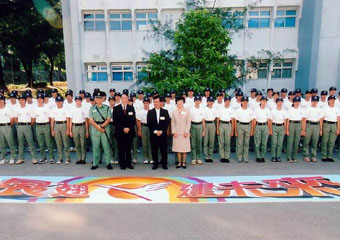
Employment ServicesYouth Work Experience and Training Scheme(YWETS) 1.2 The $400 million YWETS
was launched in July 2002 to provide on-the-job training
of six to twelve months for young people aged between
15 and 24 with educational attainment below degree level.
Our target is to provide 10 000 training places for
young people in two years. As at the end of December
2002, over 2 300 employers offered about 9 500 training
vacancies under the YWETS, and over 6 000 trainees secured
employment.
Youth Pre-employment Training Programme (YPTP) 1.3 In 2002, the YPTP
provided training to some 12 700 young persons aged
between 15 and 19. After completion of the training,
some trainees decided to pursue further studies. About
70 percent of the remaining trainees had secured employment.
New training courses were added and the careers counselling
and support services enhanced.
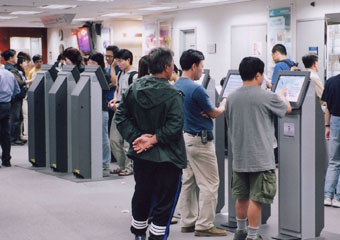
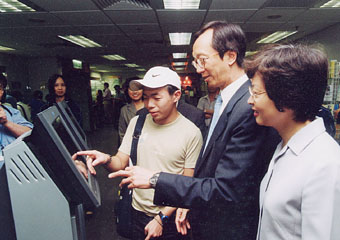
Installation of Vacancy Search Terminals at Job Centres 1.4 About 100 new vacancy
search terminals were installed in 2002 at all Job Centres.
These popular terminals can retrieve comprehensive and
up-to-date vacancy information from a huge databank
promptly, and print out selected vacancies for application.
Also, a digital display system has been set up at each
centre to show employment information non-stop. Computers
equipped with resume and application letter building
application are now available.
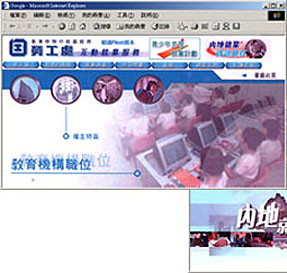
Enriching the Content of the Interactive Employment Service Website 1.5 In 2002, two dedicated
webpages were developed in the Interactive Employment
Service website. One assists educational institutions
to recruit staff, and job-seekers to obtain vacancy
information, practical tips for applying for positions
in educational organisations and other useful reference.
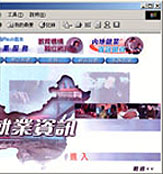
Another webpage contains information on employment in
the Mainland, including legal provisions, employment
agencies and exprience sharing, etc. Both dedicated
webpages have tailor-made search engines to match suitable
jobs for job-seekers.
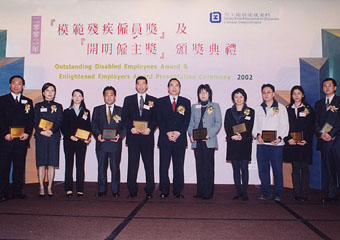
Outstanding Disabled Employees Award and Enlightened Employers Award 2002 1.6 These Awards were
to commend employees with a disability for their outstanding
performance at work and employers for their distinctive
efforts in providing employment opportunities for people
with a disability.
Safety and Health at WorkLegislative Improvements on Safety Training 1.7 To ensure safety and
health at work, we brought into operation in September
2002 the requirements on training and certification
of operators of certain loadshifting machines under
the Factories and Industrial Undertakings (Loadshifting
Machinery) Regulation. These machines include fork-lift
trucks used in industrial undertakings, bulldozers,
loaders, excavators, trucks and lorries used on construction
sites.
Employee Rights and BenefitsReform of the Employees Compensation Assistance Scheme 1.8 The Employees Compensation
Assistance (Amendment) Ordinance 2002 came into operation
in July last year, introducing reform measures to restore
the long-term financial viability of the Employees Compensation
Assistance Scheme (ECAS). The ECAS provides assistance
to injured employees who fail to receive their entitlements
for employment-related injuries from employers or insurers
after exhausting legal and financially viable means
of recovery. It also protects employers against default
of insolvent insurers. The reform measures include the
introduction of relief payment in lieu of the assistance
for common law damages, adjustment of levy rates and
imposition of surcharge on uninsured employers.
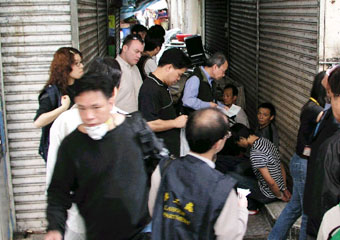
Vigorous Enforcement to Combat Illegal Employment 1.9 Territory-wide joint
enforcement operations were mounted with the Police
and the Immigration Department to combat illegal employment
in order to protect the employment opportunities of
local workers. Special campaigns to retail shops, eating
places, market stalls, renovation sites and elderly
care homes were frequently staged. An extensive publicity
campaign was also carried out.
Enhanced Protection for Employees of Government Service Contractors 1.10 To protect labour
rights, we improved communication with procuring departments
so that the latter can strengthen monitoring their outsourcing
service contractors who mainly deploy low-skilled workers.
Complaints were investigated promptly and vigorous workplace
inspections conducted. Offence records were fed to these
departments for administrative sanctions against contractors.
Briefings in labour laws were also given to the procuring
departments and their contractors.
Labour RelationsNew Unit to Step Up Enforcement Against Wage Offences 1.11 To expedite investigation
and prosecution against wage offences, a new Employment
Claims Investigation Unit was set up in September 2002
to conduct in-depth investigation into suspected breaches
of the Employment Ordinance at the earliest instance.
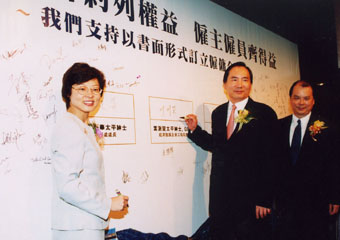
Promotion of Wider Use of Written Employment Contract 1.12 A wide range of promotional
activities was launched to promote the benefits of written
employment contracts, including the production of a
sample contract in e-format for use by employers.
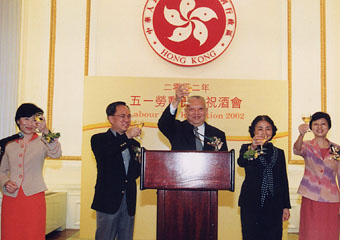
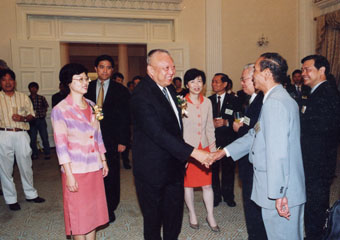
Strengthening Local and International PartnershipsLabour Day Reception 1.13 On 1 May 2002, the
Secretary for Education and Manpower hosted a cocktail
reception at Government House to celebrate the Labour
Day and to show our recognition of the contributions
of the workforce. The reception was officiated by the
Chief Executive and attended by some 200 guests from
trade unions, employer associations and other organisations.
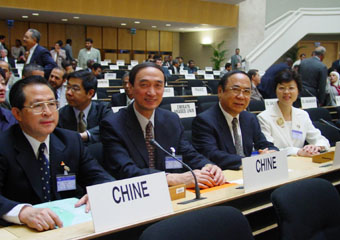
Contacts with Other Labour Administrations 1.14 We keep active liaison
and interflow with other labour administrations through
visits and participation in International Labour Organization
activities. In June 2002, a tripartite team comprising
government officials, as well as employer and employee
representatives of the Labour Advisory Board attended
the International Labour Conference in Geneva to keep
themselves abreast of newly adopted international labour
standards. The occasion also strengthened team members'
rapport with their counterparts in other countries,
thereby facilitating future co-operation.
|
|||||||||||||||||||||||||||||||||||||||||||||||||||||||||||||